
How to Build a More Hygienic Daily Skincare Routine
You wash your face twice a day, apply serum, moisturize, and still wake up with breakouts or irritation. The problem is often not your products but the habits and tools surrounding them. Hygiene in skincare goes beyond splashing water on your face. It includes what touches your skin, how you store your products, and the order in which you use them. If you have ever wondered whether your towel, pillowcase, or applicator is undoing your progress, you are asking the right question. Resources like TheBoldCollection highlight how overlooked items such as clean towels fit into a genuinely clean routine. This guide walks you through building a hygienic daily skincare routine from start to finish, with practical steps you can apply tonight.
Quick Answer
Build a hygienic daily skincare routine by cleansing with clean hands, using disposable or regularly sanitized tools, applying products from thinnest to thickest consistency, and replacing or washing anything that touches your face (towels, pillowcases, applicators, sponges) on a strict schedule. Store products away from heat, humidity, and direct sunlight, and never share items that contact your skin. Hygiene is less about buying new products and more about consistent habits around the products you already own.
Key Takeaways
- Clean hands before every cleanse are non-negotiable; dirty hands reintroduce bacteria you just removed.
- Anything that touches your face repeatedly (towels, pillowcases, makeup sponges, jade rollers) needs a washing or replacement schedule you actually follow.
- Product order matters for hygiene as well as efficacy: thinnest to thickest, and always use clean fingers or a washed applicator.
- Storage conditions, especially heat and humidity, affect how long your products stay safe and effective.
- Sharing skincare tools with others is one of the most common and most avoidable hygiene mistakes.
Start With Your Hands, Not Your Products
Most people focus on what they put on their face and ignore what touches it first. Your hands carry more bacteria than almost any other part of your body because they contact door handles, phones, keyboards, and food throughout the day. If you cleanse, tone, or moisturize with unwashed hands, you transfer that bacteria directly onto freshly cleaned skin.
Wash your hands with soap and warm water for at least twenty seconds before you begin your routine. This single habit eliminates a large percentage of avoidable irritation and breakouts for most people. If you wear rings, clean underneath them or remove them before your routine, since moisture and debris collect in the settings.
When you cannot wash your hands immediately
Keep a hand sanitizer near your skincare station for situations where you cannot reach a sink. Sanitizer is not a perfect substitute for soap and water, but it is far better than starting your routine with unwashed hands. Let it dry completely before touching your face, since residue can sting or dry out your skin.
Give Every Tool a Cleaning Schedule
Tools are where most routines quietly fall apart. A cleanser or serum is only as hygienic as the applicator you use to apply it. The following schedule works well for most skin types, though you may need to adjust it if you wear heavy makeup, sweat frequently, or have oily or acne-prone skin.
| Item | How Often to Clean or Replace | Why It Matters |
|---|---|---|
| Face towels and washcloths | Replace every 1–2 uses; wash on hot | Holds moisture and dead skin cells that feed bacteria |
| Pillowcases | Wash every 2–3 days | Your face rests on it for hours every night |
| Makeup sponges and brushes | Sponges: after every use; brushes: weekly | Bristles and foam trap oil, product, and bacteria |
| Jade rollers and gua sha | Wipe after each use; deep clean weekly | Cold stone can harbor residue from serums and skin |
| Silicone cleansing brushes | Rinse after each use; deep clean weekly | Silicone is easier to clean than bristles but still needs attention |
If you use a washcloth only once before laundering, you are already ahead of most people. The common mistake is reusing the same towel for a week because it looks clean. Fabric can look and smell fine while still holding bacteria and product residue.
Keep a small rotation, not one towel
Buying several face towels and rotating them through the week makes the habit realistic. One towel per week is not enough for most people. A rotation means you always have a clean option available, which removes the excuse to reuse, For more advanced skin rejuvenation techniques to complement your regimen, explore our guide on the rise of aesthetic and laser treatments.
Cleanse Without Over-Cleansing
Twice a day is the standard recommendation: once in the morning to remove overnight oil and product residue, and once at night to remove sunscreen, makeup, and environmental buildup. More than that strips your skin barrier and can trigger irritation that looks like poor hygiene even when you are being thorough.
Use lukewarm water, not hot. Hot water feels cleansing but damages the skin barrier over time and increases sensitivity. Pat your face dry with a clean towel rather than rubbing, which creates micro-irritation.
Double cleansing is hygiene, not just vanity
If you wear sunscreen daily, which you should, an oil-based cleanser followed by a water-based cleanser removes everything completely. Leftover sunscreen and makeup can clog pores and trap bacteria against the skin overnight. A single cleanse often leaves residue behind, especially around the hairline, jaw, and nose.
The Correct Order for a Hygienic Routine
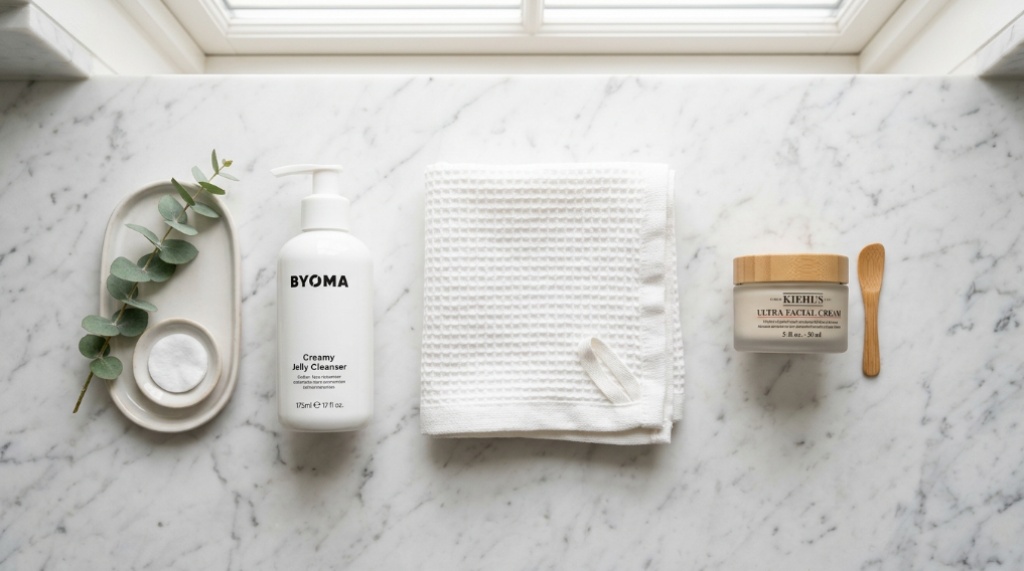
Order affects both how well products absorb and how hygienic the process is. Working from thinnest to thickest consistency keeps heavier products from blocking lighter ones and reduces the need to repeatedly touch your face with dirty fingers.
- Wash your hands.
- Cleanse with clean hands or a clean tool.
- Pat dry with a clean towel.
- Apply toner or essence with clean hands or a fresh cotton pad.
- Apply serum or treatment.
- Apply moisturizer.
- Apply sunscreen in the morning.
Scoop creams and balms with a clean spatula or a washed finger rather than dipping the same finger repeatedly. If a product comes with an applicator, use it and wash it regularly. Dropper bottles are generally more hygienic than jars because your fingers never enter the product.
Avoid double-dipping
Do not dip a used applicator back into a bottle or jar. If you apply product to your face and then dip again, you are introducing skin bacteria into the entire container. Squeeze or dispense what you need onto a clean hand first, then apply.
Store Products Where They Stay Clean and Stable
Heat, humidity, and direct sunlight degrade active ingredients and encourage bacterial growth. A steamy bathroom counter may feel convenient, but it is one of the worst places for skincare. If you must store products in the bathroom, keep them in a closed cabinet away from the shower.
Check expiration dates and period-after-opening symbols. A product that smells different, changes color, or separates should be discarded even if the date has not passed. Water-based products have shorter shelf lives than oil-based ones, and anything you apply with fingers has a shorter safe window than a product with a pump or dropper.
Signs a product should be thrown out
- Change in color, texture, or smell
- Separation that does not mix back together
- Visible mold or cloudiness in a previously clear product
- Skin reactions that appear only when using a specific product
Handle Your Towels and Fabrics Like Skincare
The towel you dry your face with should be treated as part of your routine, not as an afterthought. Use a separate face towel from your body towel, since body towels pick up more bacteria from the rest of your skin. Wash face towels on a hot cycle with a gentle, fragrance-free detergent, and avoid fabric softeners, which leave residue that can transfer to your skin.
Pillowcases deserve the same attention. If you sleep on your side or stomach, your face spends hours pressed against fabric that collects oil, sweat, and product residue. Changing your pillowcase every two to three days is one of the highest-impact changes most people can make.
Common Hygiene Mistakes That Undo Good Skincare
Even careful people make these mistakes. Fixing them often improves skin more than adding another product.
- Sharing tools. Makeup brushes, razors, and applicators should not be shared, even with family members.
- Touching your face during the day. Every touch transfers bacteria. Wash your hands before any mid-day product touch-up.
- Using the same towel for face and hands. Kitchen and bathroom hand towels carry different bacteria than a face towel should.
- Applying product over dirty skin. Layering serum over unwashed skin traps dirt and sweat underneath.
- Ignoring your phone screen. Phones press against your cheek and collect bacteria. Wipe yours down regularly.
- Storing products with the lid open. Exposure to air and bathroom moisture speeds contamination.
Build the Habit Without Overwhelming Yourself
A hygienic routine does not require dozens of steps. Start with three changes: wash your hands before skincare, use a clean face towel each time, and change your pillowcase twice a week. Once those become automatic, add tool cleaning and product storage improvements.
Simplify where you can. A routine with four well-chosen products used hygienically outperforms a twelve-step routine applied with dirty hands and shared tools. Consistency, not complexity, is what keeps skin clean and calm over time.
Frequently Asked Questions
How often should I wash my face towel?
Use a fresh face towel every one to two uses. If you wash your face twice daily, that means a clean towel roughly every day. Wash towels on a hot cycle with fragrance-free detergent to remove oil, bacteria, and product residue effectively.
Is it bad to store skincare in the bathroom?
It depends on the bathroom. A closed cabinet away from the shower is generally fine. An open shelf near a steamy shower exposes products to heat and humidity that degrade active ingredients and encourage bacterial growth. When in doubt, move products to a cool, dark, dry location.
Can I use the same washcloth for my face and body?
It is better to use separate towels. Body towels collect bacteria from areas like feet and underarms that you do not want transferred to your face. Keep a dedicated face towel, especially if you are prone to breakouts.
How long do skincare products stay safe to use?
It varies by product and formulation. Water-based products generally have shorter safe windows than oil-based ones, and anything you apply with fingers carries more contamination risk. Check the period-after-opening symbol, watch for changes in color, smell, or texture, and discard anything that looks or smells off.
Do I need a special tool to apply moisturizer hygienically?
Not necessarily. Clean, freshly washed fingers work well. If your moisturizer comes in a jar, a small spatula keeps the contents cleaner than repeatedly dipping fingers. Products with pumps or droppers are inherently more hygienic because your hands never touch the bulk of the product.
Conclusion
A hygienic skincare routine is built on small, repeatable habits rather than expensive products. Wash your hands, use clean tools and fabrics, apply products in the right order, store them properly, and never share items that touch your skin. Pick three changes to start with this week and add more as they become automatic. Your skin will respond to the consistency long before it responds to any new serum.